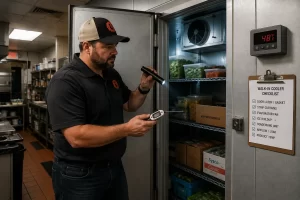

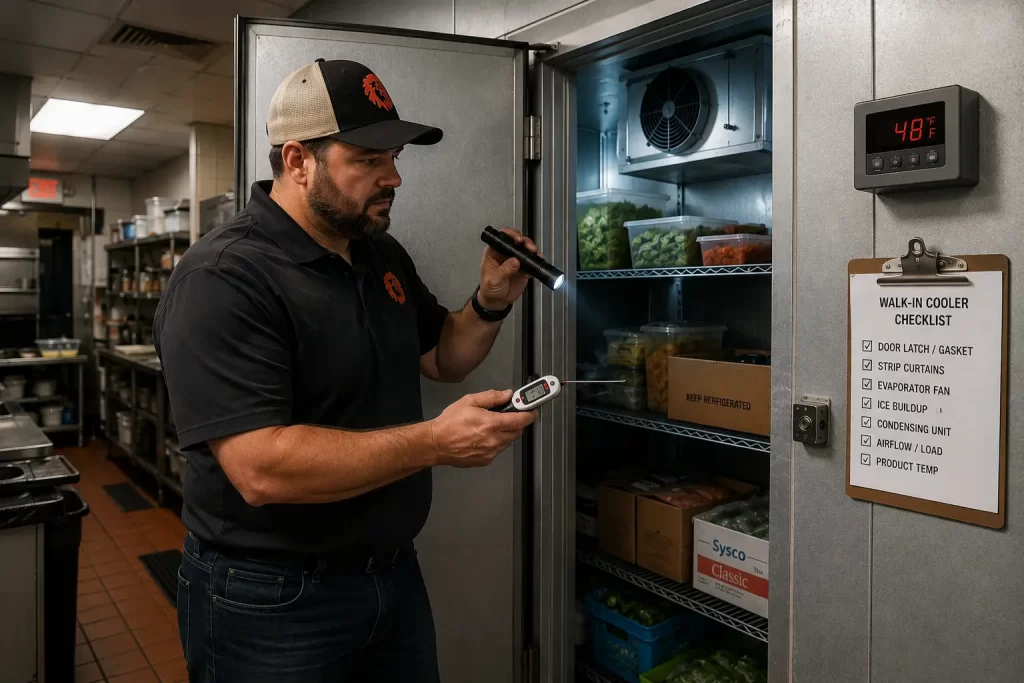
A walk-in cooler not cooling is a countdown, not an inconvenience. Product temperature is climbing, the delivery is tomorrow, and the health inspector does not grade on effort. Here is the 20-minute triage we walk restaurant owners through on the phone while a tech is on the way — what you can safely check, and what actually protects your inventory.
First: protect the product, then diagnose
Before touching the equipment, check the product temperature with a probe thermometer. Above 41°F is the danger line for most health codes. Move the most perishable items to a reach-in or a second unit if you have one, keep the door shut, and log the time — if an inspector or your insurer asks later, that log is your friend.
Minute 1–5: the door
The most common culprit is also the cheapest: the door. Check that it closes fully and latches, that the gasket seals all the way around (close it on a dollar bill — if the bill slides out, the gasket is shot at that spot), and that the strip curtains are hanging. A door propped open during a rush undoes everything the compressor does.
Minute 5–10: the evaporator inside
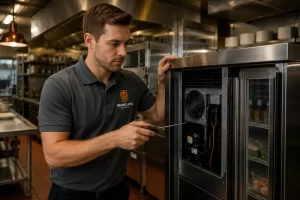
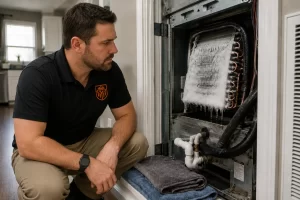
Look at the unit inside the box. Is the fan running? Is the coil a solid block of ice? An iced coil cannot absorb heat — the box warms up while the system runs harder and harder. If it is iced, do not chip at it; that punctures coils. Note it for the tech, because ice is a symptom with several causes: a failed defrost timer, low refrigerant, or airflow problems.
Minute 10–15: the condensing unit
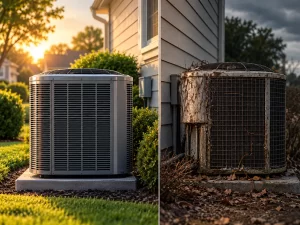
Find the condensing unit — on the roof, out back, or on top of the box. Is it running? Is the coil matted with kitchen grease and dust? A filthy condenser in a hot kitchen corner can no longer reject heat, and the box drifts warm on the hottest days first. If the unit is humming but not starting, shut it off — that hum is a motor cooking itself, the same failure we describe in our guide to equipment noises.
Minute 15–20: load and airflow inside the box
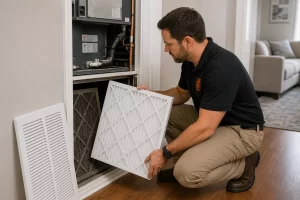
A walk-in packed to the ceiling with no air gaps blocks its own circulation. Make sure product is off the floor, clear of the evaporator, and not stacked against the walls. And if someone loaded hot food straight into the box, that alone can swamp a healthy system for hours.
What NOT to do
- Do not chip ice off the coil.
- Do not keep resetting a breaker that keeps tripping.
- Do not add refrigerant or accept a “top-off” without a leak search — the charge leaves through the same hole it came in.
- Do not turn the thermostat colder to compensate. It masks the problem and stresses the compressor.
The real math of waiting
A walk-in full of protein is often worth more than the repair that saves it — we break that math down in what a refrigeration emergency really costs a kitchen. The 20 minutes above tells us what is wrong before we arrive; it is the difference between one visit and two.
Orange Lions runs commercial refrigeration service across Charlotte, NC — walk-ins, reach-ins and freezers, with kitchens as a priority. Call (704) 771 9671, tell us what the triage found, and we will tell you honestly whether it can wait until morning.