
Most HVAC systems don’t fail without warning. They fail after months of small problems that nobody noticed — or that someone noticed but decided to deal with later.
That’s the honest story behind the majority of emergency calls we handle in Charlotte. The system wasn’t ready for the heat. It hadn’t been serviced in two, three, sometimes five years. And by the time it stopped working, the repair cost was three or four times what a tune-up would have been.
This is not a pitch for a service contract. It’s an explanation of what regular maintenance actually does — and what skips it actually cost.
What maintenance is not
Maintenance is not a technician showing up, flipping some switches, and handing you a bill for doing nothing.
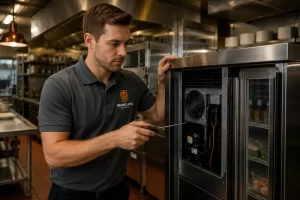
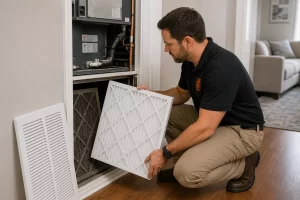
When it is done right, maintenance is a systematic inspection of every part of the system that fails incrementally — not all at once. Refrigerant levels, electrical connections, capacitors, contactors, coils, drain lines, blower motors, filters, and thermostat calibration. None of those announce their problems loudly. They degrade quietly, and quietly is where the trouble starts.
What actually happens when you skip maintenance
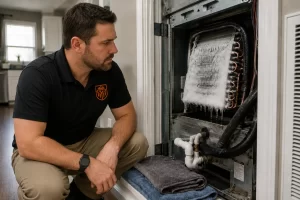
Efficiency drops, and your bill reflects it. A dirty coil, a low refrigerant charge, or a restricted filter makes the system work harder to move the same amount of air. A system running 10–15% below its rated efficiency in a Carolina summer adds up fast on the Duke Energy bill.
Small failures turn into big repairs. Capacitors are a good example. They are small parts on a maintenance visit. When a failing capacitor causes the compressor to struggle for months before it finally trips,The compressor replacement is the most expensive repair. The capacitor didn’t fail suddenly. It was failing slowly, and nobody caught it.
The system runs short cycles. Oversized units, dirty coils, and refrigerant issues all contribute to short cycling — the system kicks on, can’t complete a proper cycle, shuts off, and kicks on again. Short cycling is hard on every moving part in the system and it is also a common source of the banging, clicking, and humming sounds that generate service calls.
Warranty claims get complicated. Most equipment manufacturers require documented maintenance for warranty coverage. A compressor that fails at year four under a ten-year warranty may be fully covered — unless there’s no service history to show. That is a detail worth knowing before you need it.
The system stops on the wrong day. HVAC equipment doesn’t fail on mild days in October. It fails on the hottest day of July or the coldest night of January, when it has been running at full load for hours. A system that was borderline functional going into the season often doesn’t make it through.
How often does it actually need service
For most residential systems in Charlotte and all surrounding areas: once a year is the minimum, twice a year is the standard.
The reasoning is straightforward. Your HVAC system does two different jobs — heating and cooling — with two different peak seasons. Checking it once before summer and once before winter means it is ready for each demand before that demand arrives, not after the first breakdown.
Spring tune-up (March–April): Focus on the cooling side. Refrigerant, coils, drain lines, capacitors, electrical components. This is the service that tells you whether the AC is actually ready before Charlotte temperatures hit 90°F.
Fall tune-up (October–November): Focus on the heating side. Heat exchanger, burners, ignition, gas pressure, safety switches. If something is wrong with the heat, October is the time to find it — not January.
Do Newer HVAC Systems Still Need Maintenance?
Newer equipment is more efficient, not maintenance-free. Modern variable-speed systems and cold-climate heat pumps have more electronics than units from ten years ago. That electronics has its own maintenance requirements, and clean operation matters more to them — not less — because the controls are more precise.
The argument “it’s only two years old, it doesn’t need service” is the same logic that skips the oil change because the car still runs. It still runs, until it doesn’t.
Why Charlotte Heat Pumps Need Regular Maintenance
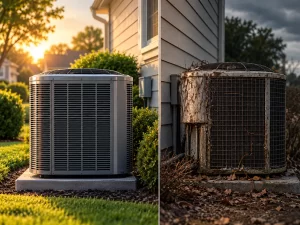
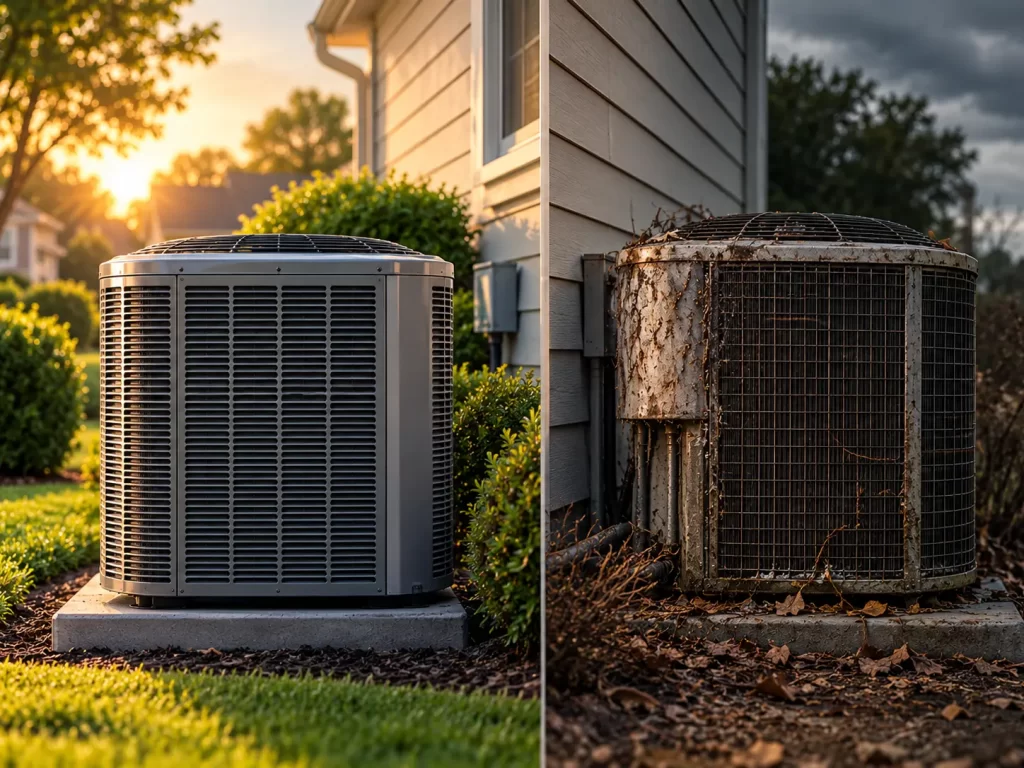
Most of the Charlotte metro runs on heat pumps. Heat pumps work by moving heat between indoor and outdoor coils, which means the outdoor coil is exposed to pollen, debris, humidity, and temperature swings year round. That outdoor coil is one of the first things that gets checked on a spring tune-up — and one of the things most likely to be restricted on a system that hasn’t been serviced.
Summers here are long and the system runs hard. A tune-up before June is not a sales tactic. It is practical.
Maintenance Costs Less Than an HVAC Repair
The maintenance visit doesn’t always prevent every failure. But it finds the ones that are coming, while they are still cheap.
Orange Lions Mechanical provides HVAC maintenance for residential and commercial systems throughout Charlotte, Matthews, Mint Hill, Indian Trail, Weddington, and surrounding areas.
If your system hasn’t been serviced this year, call us at (704) 771-9671 and we will tell you what it actually needs — not what generates the most on a ticket.
Schedule your maintenance visit before the season changes.