
When a compressor dies on a Friday night, the repair invoice is the number everyone stares at. It is also the smallest number on the bill. After years of commercial refrigeration repair in Charlotte kitchens, here is the honest math of what downtime actually costs — and the short list of decisions that shrink it.
Line one: the inventory
A stocked walk-in in a working restaurant holds thousands of dollars in product, and protein is unforgiving: once temperatures cross the safety line, the health code does not care how close it was. One warm night can out-cost the repair several times over. That is why the first move in any failure is triage of the product, not the equipment — our 20-minute walk-in triage starts there.
Line two: the service you cannot sell
A kitchen without cold storage does not run at 80% — menu sections disappear, prep stalls, and a Saturday of lost covers is revenue that never comes back. Add the quieter costs: staff standing around on the clock, emergency product runs at retail prices, and the reviews written by the table that came for the ribeye you 86’d.
Line three: the emergency premium
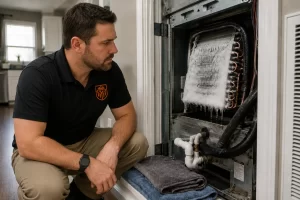
The same repair costs more at 11pm than at 9am — after-hours rates, expedited parts. Some of that is unavoidable in a true emergency. Most refrigeration emergencies, though, were not sudden: they announced themselves for weeks as ice on the coil, a compressor running longer and longer, a door gasket in shreds, or a unit humming without starting — the noises we catalog in our sound-diagnosis guide apply to refrigeration racks too.
What actually shrinks the bill
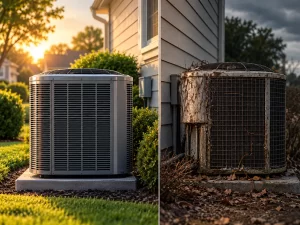
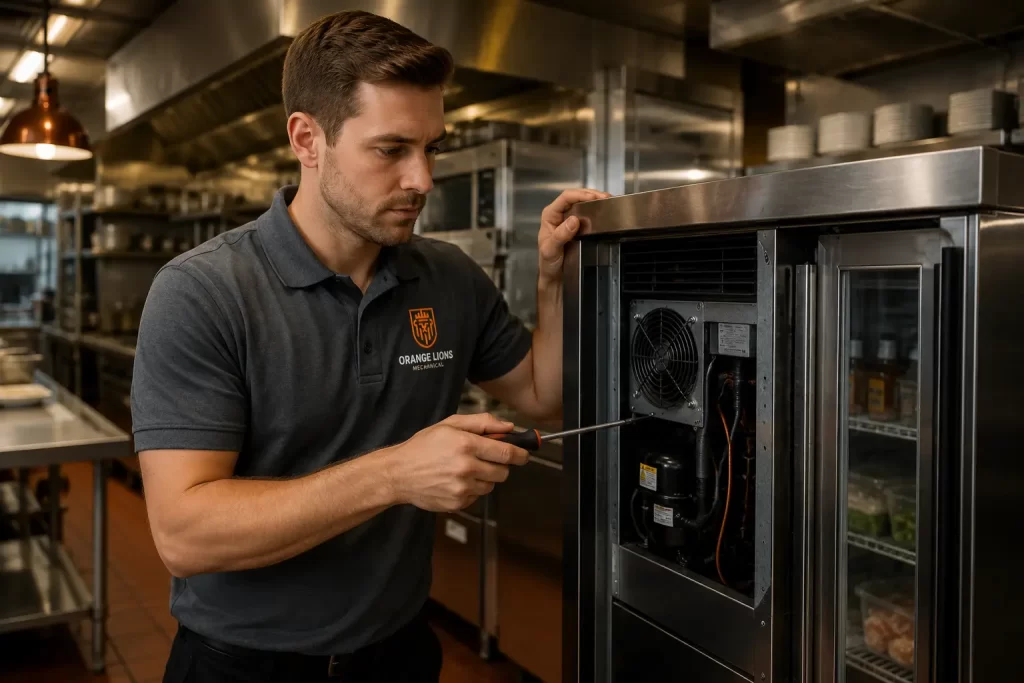
- Coil cleanings on a schedule. A greasy condenser in a kitchen corner is the most preventable failure we see.
- Gaskets and strip curtains replaced when worn — cheap parts that keep the compressor from running constantly.
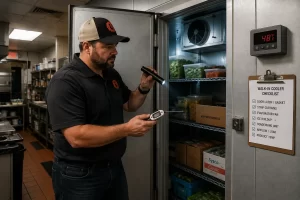
- A probe thermometer log. Catches drift days before failure, and protects you with inspectors and insurers.
- Known good backup: which reach-in absorbs the walk-in’s critical product, decided before the night it matters.
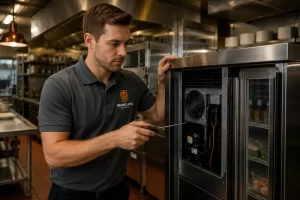
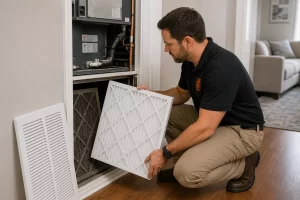
- A service relationship before the emergency. A tech who already knows your equipment, refrigerant types and access arrives with the right parts — that is often the difference between one visit and two.
The one-line version
The repair is the cheapest part of a refrigeration emergency. Inventory, lost service and the after-hours premium are the real bill — and maintenance is the only line item that shrinks all three.
Orange Lions Mechanical services commercial refrigeration across Charlotte, NC — walk-ins, reach-ins, freezers and kitchen HVAC, with maintenance plans built around inspection schedules. Call (704) 771 9671 before the Friday night, and it stays a line item instead of a story.